About Us
Our History
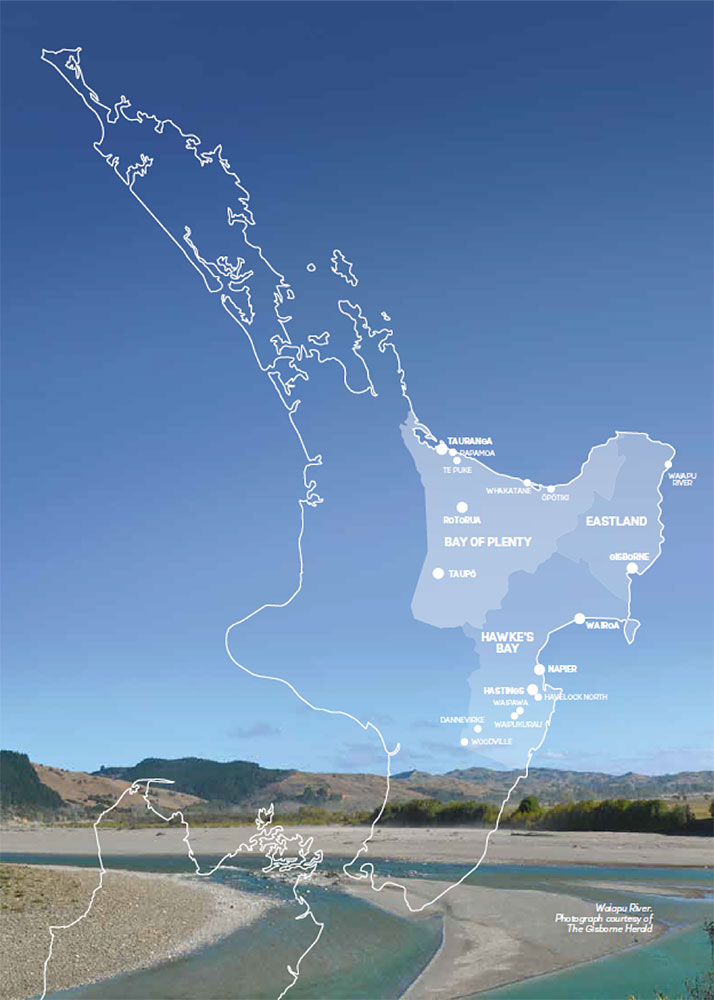
Our roots go back to 1835, when the Church Missionary Society established the earliest Anglican Mission in Te Papa, Bay of Plenty. Over the following decades, missions spread through the Waiapu region — to Ōpōtiki in 1839, along the East Cape in the 1840s, and into Wairoa and Waitangi by 1844. The Diocese of Waiapu was formed in 1858.
Over time, Waiapu parishes adapted their services to meet changing community needs and broader social shifts.
In the late nineteenth and early twentieth centuries, parishes recognised the need to support young women and unmarried mothers, and housing for children. The Girls’ Friendly Society (GFS) was established in 1902 to provide education, help, and guidance for young women and unmarried mothers. St Mary’s Receiving Home was opened in 1915 to accommodate unmarried mothers before and after the birth of their babies, housing their children up until they were four years old.
Children’s homes were set up in the early 1900s in Central Hawke’s Bay to meet the needs of Hawke’s Bay children, including orphans and children whose families couldn’t afford to house them. Previously, these children had been sent away to institutions in other parts of Aotearoa New Zealand. St Hilda’s Orphanage in Ōtāne and Abbotsford Home in Waipawa were set up in the early twentieth century to house children aged four to fifteen, and operated until the mid-1900s.
In the middle to late twentieth century, parishes recognised and acted on the need for residential services for the elderly and early childhood education services in centres including Napier, Tauranga, Gisborne and Rotorua.
The Waiapu Anglican Social Services Trust Board was set up in 1991 to provide professional oversight of the social services operating at the time. In 1997 Anglican Care Waiapu Limited was established as the legal entity to own and operate the residential aged care services.
In 2017, ACW sold its retirement villages and rest homes, refocusing its energy on community-based services and early childhood education. Today, we are building on nearly two centuries of care — finding new ways to walk alongside the people and communities of Waiapu.